

極速三國 一秒開戰
頑星遊戲
I spent time with 極速三國 一秒開戰, a free strategy game from 頑星遊戲 that places the Three Kingdoms setting at the center of a fast-moving national war experience. Its basic idea is easy to understand: gather famous heroes, build strength, and compete for control in a divided world. What matters in practice is how much planning sits underneath that quick-war promise. This is not simply a game about tapping an attack button. It asks me to think about timing, resource use, alliances, and whether a short-term victory is worth weakening my position later.
The game is aimed at players who enjoy mobile strategy but do not want a completely passive experience. The Three Kingdoms theme gives the battles a familiar historical flavor, while the large-scale structure makes every decision feel connected to a wider contest. I found it most appealing when I had a clear objective for a session, such as improving a force, preparing for a conflict, or checking the state of a territory. It is less satisfying if I want a self-contained battle that begins and ends without wider consequences.
How the current version feels to play
The current release is version 2.47, and the game presents itself as a mature, actively shaped strategy title rather than a tiny experimental project. It launched on July 7, 2024, and supports devices running Android 5.0 or later. That broad operating-system requirement makes it approachable for people with older compatible phones, although the visual ambition means the experience will still depend heavily on the individual device. A newer phone is the safer choice if I want smoother movement and less frustration during busy moments.
At its heart, this is a Three Kingdoms strategy game built around the tension between preparation and action. I am not only asking whether my army can win one encounter. I also have to consider what that encounter costs, whether my next move becomes predictable, and whether another player or faction can take advantage of the gap I create. That wider view is what separates it from a simple collection game with battles attached.
The “fast war” identity is useful, but I would not interpret it as meaning every part of the game is instant. Quick decisions can lead to quick consequences, yet meaningful progress still benefits from patience. I get more from the game when I check my priorities before committing resources. Rushing into every available conflict may feel exciting at first, but it can leave my overall position less flexible. The best rhythm is to alternate between active moves and short periods of review.
Related News






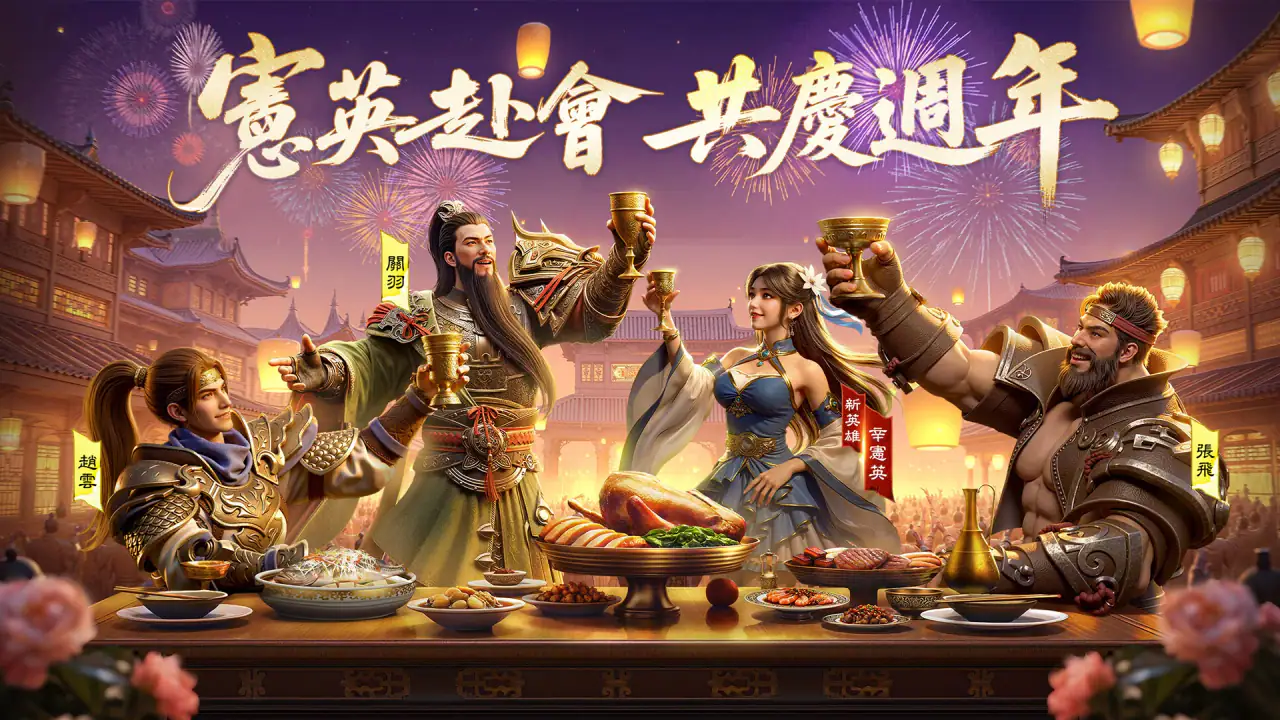
The presentation is one of the first things that caught my attention. The game aims for a high-end Three Kingdoms look, with heroes and battle scenes designed to make the setting feel grand rather than abstract. That visual approach helps the historical theme stand out from generic medieval strategy games. It also creates a practical trade-off: detailed presentation is attractive, but players with limited storage, older hardware, or a preference for very lightweight games may find this style less comfortable than a simpler alternative.
My advice for a new player is to resist spending every early reward immediately. In a game built around hero collection and territorial pressure, flexibility is valuable. Keeping some resources available lets me respond to an unexpected obstacle instead of being forced into one narrow plan. I also found it helpful to decide whether I wanted to specialize around a small group of dependable heroes or spread investment across a wider roster. The first approach is easier to manage; the second can offer more options but demands closer attention.
The strategy is in the timing, not only the battle result
One of the more useful lessons is that a winning attack can still be a poor decision. If I commit too much strength to one objective, I may gain ground while making the next defense harder. This is especially important for players who come from turn-based tactics games and expect every victory to be automatically positive. Here, the surrounding situation matters. I try to ask what the move opens up, what it leaves exposed, and whether I can recover before another conflict arrives.
Gallery
That makes the game a better match for someone who enjoys planning several steps ahead. It is also why I would not recommend it to a player who dislikes persistent competition or prefers a purely relaxed campaign. Even when I am not fighting, I am thinking about the next phase. The pressure is not necessarily overwhelming, but it is part of the identity rather than an optional extra.
A realistic everyday use case is a short evening check-in after work or school. I can review my current position, improve a hero or army, decide which objective deserves attention, and then leave with a clear plan for the next session. That works well when I treat the game as a strategy routine instead of trying to complete everything at once. On a busy day, I would rather make one careful decision than start several conflicts without enough time to follow through.
For longer sessions, the game becomes more analytical. I can compare possible targets, think about how my roster supports the next move, and adjust after seeing where my original plan was too aggressive. This is where the title feels more substantial than its quick-war branding suggests. The action may be immediate, but good results come from understanding the position before acting.
Heroes, progression, and the cost of choice
The hero-focused structure gives the game much of its personality. Familiar Three Kingdoms figures make the roster more interesting than a set of anonymous units, and collecting them creates a natural reason to keep experimenting. Still, collection alone is not enough to make a strategy game satisfying. The important question is whether I can make meaningful choices about which heroes deserve attention and how those choices affect my wider plan.
I prefer to build a coherent group rather than chase every new possibility. A smaller, better-understood roster makes it easier to recognize strengths and weaknesses during a conflict. It also reduces the feeling that progress is scattered across too many partially developed options. Players who enjoy collecting everything may take a different approach, but they should be prepared for more management and more decisions about where limited resources go.
The free entry point is helpful because I can test the core loop before deciding whether it deserves a place on my phone. The game includes in-app purchases ranging from $0.99 to $299.99 per item, so the financial side deserves attention from the beginning. I would set a personal spending limit before becoming invested in the roster. The highest-priced items are not something I would treat casually, and players who want a completely purchase-free environment should approach with clear expectations.
That does not automatically make the game unsuitable. Some players are comfortable treating purchases as optional support or as a way to save time. Others want every meaningful advantage to come only from play. The right choice depends on which experience I want. For me, the important safeguard is to judge progress by decisions and consistency rather than by comparing my account with players who spend more.
The Teen content rating also gives a useful indication of the intended audience. The war setting, competitive structure, and historical conflict are not designed as a children’s game. I would be comfortable recommending it to a teenager who already understands in-app purchase boundaries, but I would still enable device-level spending controls for shared phones. That is a practical step whenever a free strategy game offers a wide purchase range.
What the latest release means for returning players
Players joining in the current version should expect an experience that has already moved beyond its initial launch state. Version 2.47 is the clearest current marker, and it tells me that the game has gone through multiple stages of development since release. I would not assume that every system feels final or that every balance decision will remain unchanged. Strategy games often evolve as developers observe how players use heroes, resources, and competitive options.
For someone returning after time away, the best approach is to review the account rather than immediately copying an old routine. A previous favorite hero may still fit the same role, but the surrounding environment can change the value of that choice. I would first inspect the current roster, available upgrades, and immediate objectives, then rebuild a short-term plan. Returning players often lose momentum by assuming that an old formula will work without adjustment.
The developer, 頑星遊戲, has positioned the title around a recognizable Three Kingdoms world and a large-scale war structure. That combination gives the game a clear identity, but it also creates expectations. Existing users will likely care most about whether future changes preserve strategic variety instead of simply adding more collection pressure. New content is useful only when it creates new decisions; another reward to claim is less valuable if it does not change how I play.
I also think the current version should be judged in two separate ways. First, there is the immediate experience: does the game offer an enjoyable loop of preparation, hero development, and conflict? Second, there is the longer-term question of whether the evolving version keeps that loop fair and understandable. A player can enjoy the present build while still watching how future adjustments affect balance, spending pressure, and the usefulness of older investments.
Where the game still asks for patience
The biggest friction is the amount of attention the game can demand. A large strategy map and a hero-centered progression system naturally create many things to inspect. That depth is welcome for experienced players, but it can make the first sessions feel busy. I had to learn not only what I could do, but which actions deserved priority. Someone looking for a simple five-minute game may find the structure heavier than expected.
The second limitation is the difference between fast action and fast progress. The game can make war feel immediate, yet developing a strong position still requires planning and repeated decisions. Players who expect the title to remove all waiting or routine management may be disappointed. I see this as a trade-off rather than a flaw: the strategic layer would be shallow if every useful result arrived instantly, but the game could still feel demanding when I have limited time.
The purchase range is another reason to be selective. Free installation lowers the barrier to entry, but the presence of expensive individual items means I would not recommend playing without a budget plan. This matters particularly for competitive players, because the urge to close a gap quickly can turn a strategic decision into an emotional purchase. I get a healthier experience when I decide in advance what I am willing to spend and treat anything beyond that as unnecessary.
There is also a learning curve for people unfamiliar with Three Kingdoms names and relationships. The historical theme adds flavor, but recognition is not required to enjoy the game. I simply focus on each hero’s practical role instead of trying to remember every story connection. Players who already know the setting will gain extra enjoyment from the cast, while newcomers can approach it as a roster of strategic choices.
Compared with a traditional turn-based tactics game, this title feels broader and less self-contained. A turn-based alternative is usually better when I want carefully bounded battles, direct control over every move, and a clear campaign endpoint. Compared with a lightweight idle strategy game, 極速三國 offers more involvement and more room for planning, but it also asks me to pay closer attention. The choice comes down to whether I want a living contest or a simpler background progression loop.
Small habits that make the experience better
I found three habits especially useful. First, I separate “must do now” actions from “nice to do later” upgrades. That prevents a crowded menu of possibilities from controlling my session. Second, I keep a reserve instead of converting every resource into immediate power. A reserve gives me room to react when the map changes or a promising opportunity appears. Third, I review the reason for a defeat before changing everything. Sometimes the problem is timing or overextension, not the entire hero setup.
Another practical tip is to use short sessions for observation, not only progress. I can log in, inspect what has changed around my position, and leave without forcing an attack. That sounds passive, but it helps me avoid making a poor commitment simply because I opened the game with limited time. The title rewards players who can distinguish urgency from impatience.
For players managing a shared device, I would also check the purchase settings before handing the phone to someone younger. The Teen rating and broad in-app purchase range make that a sensible precaution. This is not about avoiding the game; it is about keeping a free download from becoming an uncontrolled expense.
Device choice matters too. Since Android 5.0 is the minimum supported operating system, compatibility should be broad, but compatibility is not the same as comfort. If the phone is old or already struggles with visually demanding games, I would begin with shorter sessions and watch for heat, battery drain, or sluggish controls. Those are practical reasons to choose a simpler strategy game instead, even if this one installs successfully.
Who should play and who should skip it
I would recommend this game to players who enjoy the Three Kingdoms setting, hero collection with a strategic purpose, and competition that continues beyond one battle. It is particularly suitable for someone who likes checking a plan, making a calculated move, and returning later to see how the situation developed. The free price makes it easy to try, while the current build offers enough structure for players who want more than a quick arcade distraction.
I would be more cautious with players who dislike ongoing progression, competitive pressure, or menus that require regular attention. It is also not my first recommendation for someone who wants a fully story-driven historical adventure with no spending decisions. A focused single-player tactics game would be a better fit in that case. Likewise, people who want a very light idle experience may prefer a title that asks less from them between battles.
The average rating is 4.1 from around seven thousand ratings, and the game has passed one hundred thousand installs. Those figures suggest a meaningful player base, but they do not decide whether the game suits an individual. I would use them as reassurance that the title has attracted attention, then make the final decision based on comfort with its war-focused structure and purchase model.
Because the content is rated Teen, I see it as a better fit for older teenagers and adults than for young children. Parents should discuss spending before allowing installation, especially on a device connected to a payment method. The game’s historical theme may sound educational at first glance, but I would approach it primarily as entertainment and strategy rather than as a reliable lesson in history.
My view after living with the current build
What I like most is the way the game turns the Three Kingdoms setting into a continuing strategic problem. The heroes are not only decoration, and the war is not reduced to a single dramatic button press. I have to think about what my current strength can accomplish, what it cannot, and how one decision affects the next. That is the part I would return to when I want a mobile strategy game with more substance than a simple collection loop.
What holds it back is the same ambition. The broader structure can feel demanding, and the purchase range means I would not enter the game without a clear personal boundary. The quick-war identity is strongest when I understand that speed should mean decisive planning, not mindless rushing. Players who accept that distinction will likely get more from it than players expecting instant, effortless progress.
For me, 極速三國 一秒開戰 is worth trying if I want a free Three Kingdoms strategy game that combines hero development with a wider contest for power. I would install it on a suitable device, spend the opening sessions learning the priorities, and avoid buying anything until I understood the progression. I would then watch future updates for meaningful strategic improvements rather than judging the game only by new rewards or a larger roster.
The title’s next stage matters because version 2.47 is not just a label; it is a reminder that the experience can continue to change. I would watch how the developer handles balance, how approachable the systems remain for new players, and whether older heroes and earlier investments keep their value. If those areas stay healthy, the game has a solid reason to remain installed. If the competition becomes too dependent on spending or routine management overwhelms the strategy, a simpler alternative would be the better choice.
FAQs for 極速三國 一秒開戰
What is 極速三國 一秒開戰, and what kind of game is it?
極速三國 一秒開戰 is a mobile strategy game inspired by the Three Kingdoms period. It combines hero collection, real-time or fast-paced battles, city development, resource management, and competitive multiplayer features. Players recruit famous generals, improve their abilities, form teams, and take part in campaigns and events. The game is designed for users who enjoy strategic planning but also want battles to begin quickly without lengthy preparation.
Can I play 極速三國 一秒開戰 without spending money?
You can download and play 極速三國 一秒開戰 without making an initial purchase, and the game generally provides free rewards, missions, and progression opportunities. However, like many free-to-play strategy games, it may offer optional in-app purchases for premium currency, upgraded resources, recruitment attempts, or faster development. Free players may need more patience and consistent daily activity, especially when competing against users who invest heavily in powerful generals or limited-time advantages.
Does the game require an internet connection to play?
An internet connection is normally required for 極速三國 一秒開戰 because the game relies on online accounts, cloud-based progress, events, rankings, resource systems, and multiplayer content. You should expect to use Wi-Fi or mobile data for logging in, downloading updates, synchronizing progress, and participating in battles. Offline play may be unavailable or severely limited, so this is not the best choice if you are looking for a strategy game that can be played fully without connectivity.
Is 極速三國 一秒開戰 suitable for beginners who are unfamiliar with the Three Kingdoms?
Yes, beginners can start playing even without detailed knowledge of Chinese history. The game introduces its main systems through tutorials, missions, and guided progression, while character descriptions help explain the role of important generals. Nevertheless, players who understand team composition, combat attributes, formations, and resource priorities may progress more efficiently. New users should avoid spending valuable materials too quickly and should focus first on a balanced team and the game’s early objectives.
What should I know about performance, permissions, and in-app purchases before downloading?
Before downloading 極速三國 一秒開戰, make sure your Android or iOS device has enough free storage and is running a reasonably current operating system. Strategy games with animated battles and online features can use noticeable battery, data, and memory during longer sessions. The app may request permissions related to notifications or account functionality, depending on the platform. Also review the store listing for current purchase options, age guidance, privacy details, and regional availability before installing.
Pros
- Quick battles make it easy to play during short breaks.
- Three Kingdoms characters offer familiar historical appeal.
- Auto-battle reduces the need for constant screen tapping.
- Multiple progression systems provide long-term goals.
- Bright artwork and skill effects make combat visually engaging.
Cons
- Frequent upgrade screens may feel overwhelming for new players.
- Progress can become heavily dependent on collecting duplicate heroes.
- Competitive modes may favor players who spend more money.
- The small interface can be difficult to read on compact phones.
- Limited offline functionality may require a stable internet connection.


